Google tested AMIE with 98 patients
Google evaluated its medical chatbot AMIE with 98 urgent-care patients, demonstrating how AI intake tools can prepare diagnostic summaries before human physicians begin consultation.
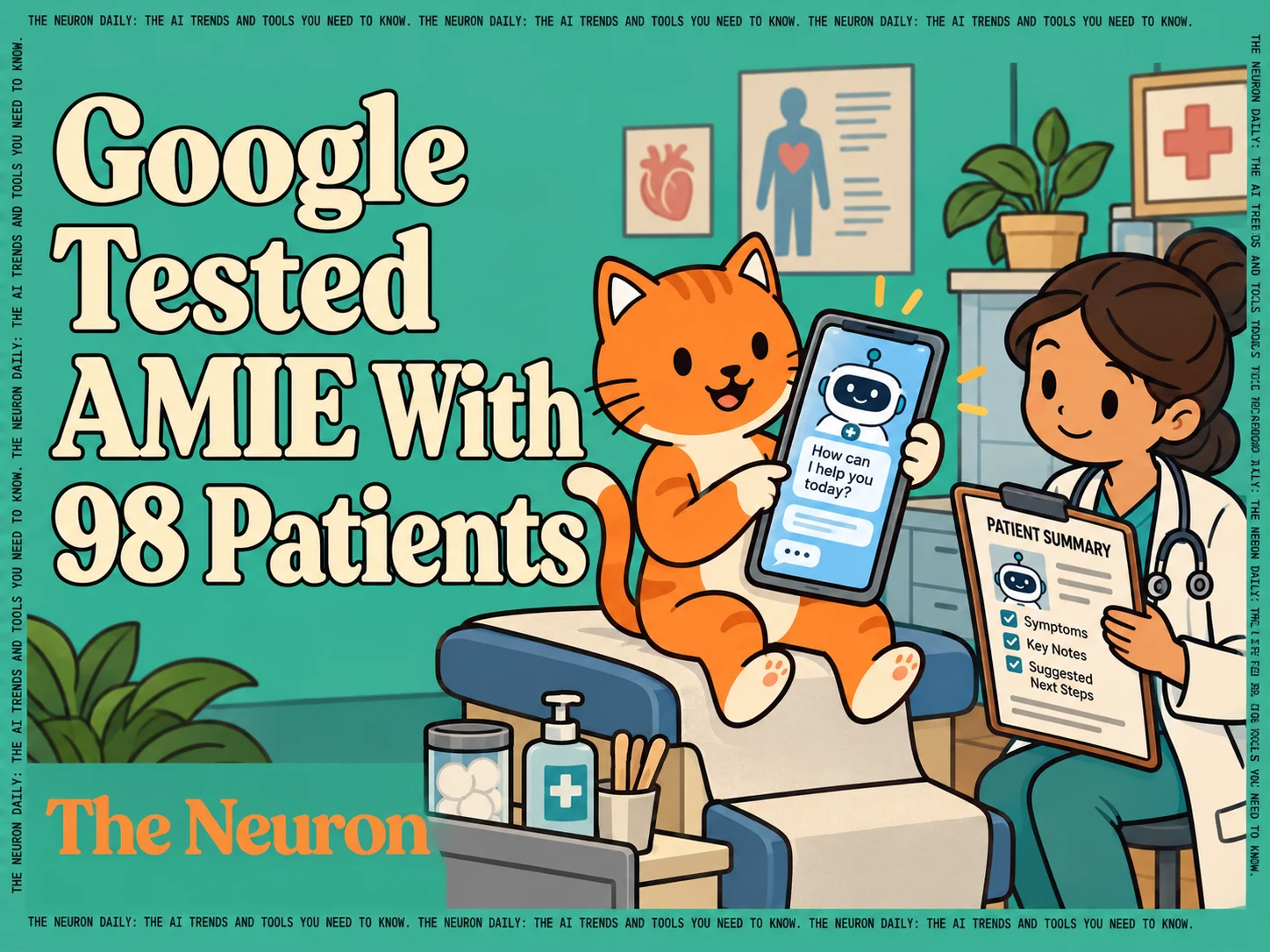
Google tested its conversational medical AI, AMIE, with 98 real patients prior to urgent-care visits. Patients communicated their symptoms over text while AMIE asked follow-up questions. Before each appointment, physicians received both the raw transcript and a summary. Google reported that the doctor's eventual final diagnosis was included on AMIE's list of potential diagnoses in 90 percent of cases.
Safety and supervision were built into the study design. A physician monitored every conversation live and could step in at any point. Overseeing clinicians identified one hallucination and manually added clinical details in five interactions. While the trial lacked a control group and did not evaluate unsupervised performance, none of the interactions triggered preset stopping safety rules.
The trial arrives amid wider adoption of clinical AI tools across patient intake, monitoring, and prescribing workflows. Utah approved pilots that gradually reduce manual oversight; Nolla Health's active acne pilot starts with two physicians reviewing every prescription, while August AI proposes auto-approving 90-day refills for non-controlled medications at fixed doses, eventually scaling review down to one in 20 per category. Other active tools include Healthleap, which analyzes adult hospital records for malnutrition risks, and Teladoc's SoloScribe for clinical note generation and SoloVitals for estimating heart and breathing rates via a camera.
For medical practitioners, these tools redefine the start of the clinical encounter. Having an AI collect structured patient histories before an appointment can save valuable minutes during brief urgent-care visits. However, as automated systems move from pre-visit context collection toward autonomous refill approvals, clinicians will need to maintain rigorous safety checks to catch hallucinations before they affect care.
This is our own summary of reporting by The Neuron